
A vertical multistage pump starts losing pressure. The motor still runs, there is no obvious leak, and the customer wants the system back in service quickly.
Is it time for a replacement chamber stack assembly? Or would it make more sense to replace the pump?
There is no reliable answer from the symptom alone. Low pressure can come from worn internal parts, but it can also be caused by an inlet restriction, air in the system, a change in operating conditions, or another problem outside the chamber stack.
For maintenance teams and pump repair businesses, the useful question is not simply which part is cheaper? It is which repair will restore the required performance without leaving another known problem in place?
What Does a Chamber Stack Assembly Actually Replace?
In a vertical multistage centrifugal pump, the hydraulic stages generate pressure as the liquid passes through successive impellers and chambers. Our Chamber Stack Assemblies page describes the assembly category; the actual repair scope must follow the condition of the pump.
A pump stack kit generally replaces components within these internal hydraulic stages. Depending on the pump design and the supplier’s scope of supply, it may include impellers, chambers and related internal components. You should confirm exactly what is included before ordering; a stack kit should not be assumed to include the mechanical seal, outer casing, or all other service parts.
This makes a chamber stack assembly a practical repair option when the hydraulic stage assembly needs replacement but the remaining pump components are still suitable for reuse.
It is not, however, a cure for every pump performance problem.
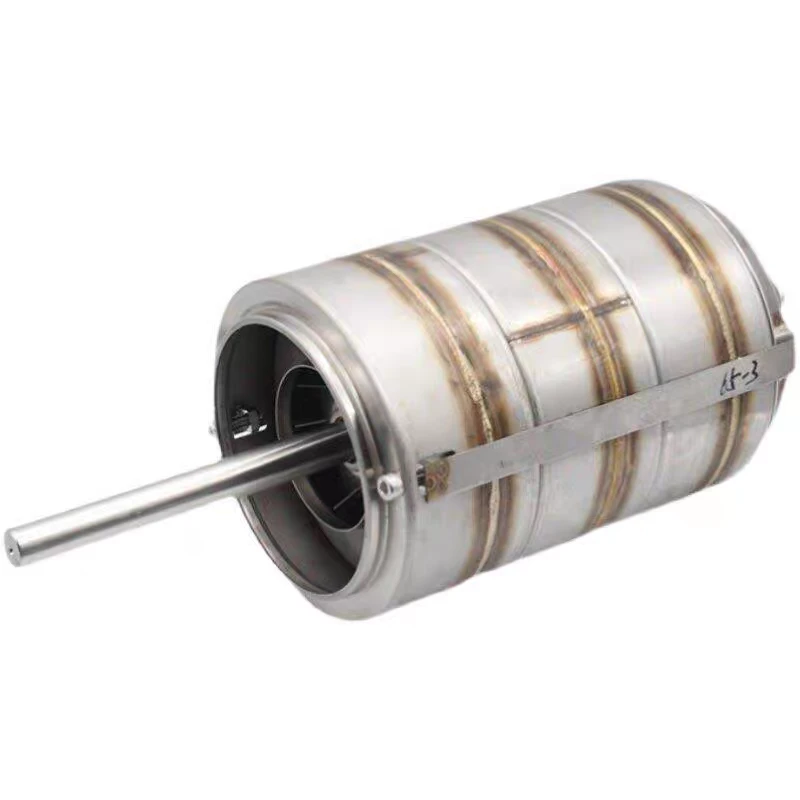
Chamber stack laid on its side. This is an internal assembly for a vertical multistage pump, not a complete pump.
Check These Issues Before Blaming the Chamber Stack Assembly
One of the easiest ways to waste money on a repair is to order internal parts before checking the system around the pump.
If the pump is running but not delivering its expected flow or pressure, start with the operating conditions and the manufacturer’s troubleshooting instructions. The Grundfos CR, CRI, CRN operating instructions, for example, list inlet restrictions, air, and insufficient inlet pressure among causes to investigate. These are fault-finding examples, not a diagnosis of a particular pump.
| What you notice | What to check before ordering parts |
|---|---|
| Lower discharge pressure | Inlet pressure, operating speed, valve positions, system demand and the actual flow rate |
| Reduced or unstable flow | Inlet strainer, suction piping, trapped air, available inlet pressure and possible blockages |
| Unusual noise or vibration | Cavitation, air entrainment, installation issues, coupling condition and internal contact |
| Leakage near the pump shaft | Seal leakage causes and inspection, rather than assuming the chamber stack is worn |
| Motor runs but no water is delivered | Priming, suction supply, closed or blocked valves and the pump’s rotation direction, where applicable |
Comparing discharge pressure alone can also be misleading. If the inlet pressure has changed, the discharge reading may change even when the pump’s own hydraulic performance has not deteriorated. Where practical, compare the pressure rise across the pump and its flow rate with the original duty point, taking account of the actual running speed and fluid.
Only qualified personnel should perform testing or dismantling. Isolate electrical power, relieve pressure, and follow the applicable service procedure before opening the pump.
When a Replacement Chamber Stack Assembly Makes Sense
A replacement chamber stack assembly becomes a stronger option when a technician has identified wear or damage within the hydraulic stages and the rest of the pump remains serviceable.
Examples include:
- Worn impellers or wear surfaces. Internal wear can increase leakage within the hydraulic stages and reduce the pump’s ability to develop its previous head.
- Damaged chambers or stage components. Erosion, scoring, or other damage may make continued reuse impractical.
- Multiple stages needing attention. When several internal components are worn, replacing a correctly matched assembly may be simpler than sourcing and rebuilding many individual pieces.
- A sound external pump assembly. If the casing, motor, and every component outside the agreed replacement scope have been inspected and found suitable, a hydraulic-stage repair may avoid unnecessary replacement of those parts.
An inspection matters more than an assumption based on pump age. A pump that has run for years in clean water may be in better internal condition than a newer one that has experienced repeated dry running, abrasive particles, or cavitation.
The original cause of damage also matters. If poor suction conditions or contaminants caused the wear, installing a new stack without addressing that cause may lead to the same failure again.
When a Chamber Stack Assembly Is Probably Not Enough
Sometimes the internal stages are only part of the problem.
Replacing the chamber stack assembly may not be the best choice if the pump has a severely damaged pressure casing, major structural corrosion, or other faults outside the hydraulic-stage repair scope. A damaged shaft needs a more specific check: some stack assemblies include a replacement shaft, while others do not. Establish what the proposed kit actually replaces before deciding that a shaft fault requires a larger replacement.
The same applies when the motor or coupling needs substantial work, or when the duty requirements have changed significantly since the pump was selected. A replacement chamber stack assembly matched to the original pump will not automatically solve a new flow, pressure, temperature, or fluid-compatibility requirement.
Where the project specifies particular materials or approvals, review the documentation for the proposed replacement configuration. Documentation for one complete pump model should not be assumed to cover an unrelated component or repaired assembly.
In these situations, it is worth comparing a stack repair with a replacement pump assembly before committing to an order.
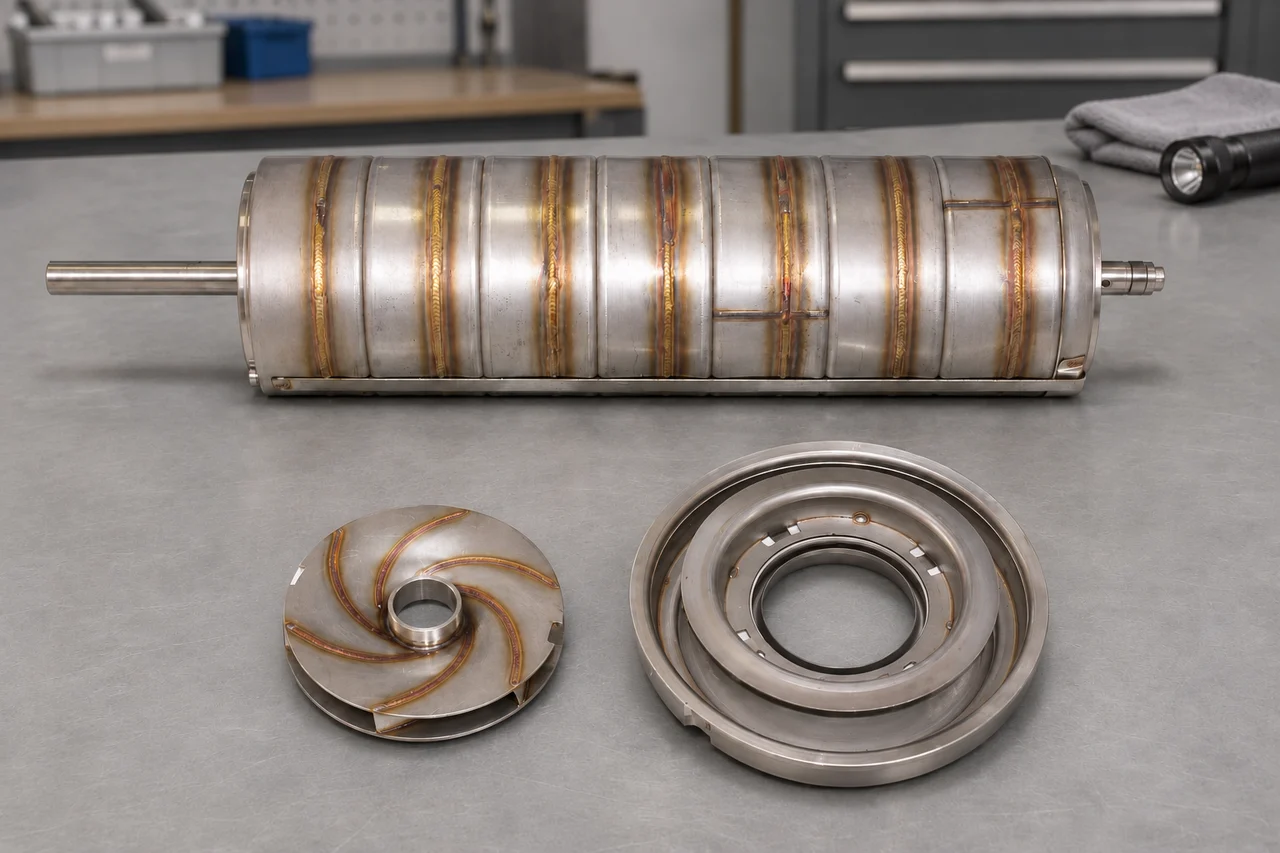
Inspection of the internal assembly helps define the repair scope.
Chamber Stack Assembly, Bare Shaft Pump, or Complete Pump?
Repair decisions often involve three options. Here, a bare shaft pump means the pump assembly supplied without its motor; a complete pump means the pump and motor supplied together. Confirm the actual contents of either quotation.
| Option | Worth considering when | What still needs checking |
|---|---|---|
| Replacement chamber stack assembly | Hydraulic stages are worn; the surrounding pump components can be reused | Exact model and stage configuration, internal dimensions, material requirements and condition of reusable parts |
| Bare shaft pump | More of the pump assembly needs replacement, but the existing motor may still be usable | IEC or NEMA motor interface, coupling, shaft connection, installation dimensions, performance and application requirements |
| Complete pump | The motor and pump both need replacement, the configuration is unsuitable, or extensive damage makes repair impractical | Duty point, materials, motor specification, connections, dimensions and any applicable approvals |
A bare shaft pump can be an especially useful middle option for repair businesses. It allows the customer to consider replacing the pump unit without automatically purchasing a new motor. But the existing motor cannot be reused based on appearance alone: interface dimensions, coupling arrangement, motor condition and operating requirements must be confirmed. An IEC or NEMA designation alone does not establish that a particular motor and pump will fit. Confirm power, speed, mounting frame, shaft connection, and the required duty together.
If retaining a NEMA motor, use the NEMA bare shaft pump replacement checklist to review the mounting face, shaft, coupling, speed, and bearing requirements before deciding that motor reuse is practical.
Compare the options by the actual failure, available service time, and total repair effort.
How to Decide if the Repair Is Worthwhile
Before requesting a quotation, ask a few practical questions:
- Has the fault been identified? Confirm that the performance issue is inside the pump, rather than in the supply piping or controls.
- Which components are reusable? Inspect the casing, shaft, motor and other parts relevant to the repair.
- Can the replacement be matched accurately? Verify the pump model, stage arrangement, design version and material requirements.
- What is the total repair cost? Include the part, labor, any additional seals or service items, transport, and commissioning—not just the quoted kit price.
- What is the downtime impact? Compare the confirmed delivery date, inspection and rebuild time, motor adaptation if needed, and testing before return to service. A kit with a low price but a long wait may cost more in lost production. Conversely, a stocked stack may offer no time saving if suitable workshop capacity is unavailable.
There is no universal percentage at which a chamber stack assembly becomes better value than a new pump. Labor rates, pump size, service history and local stock can change the answer considerably.
REPLACEMENT SUPPORT
Comparing Repair Options?
Share the fault symptoms and inspection findings to help define the replacement scope.
Request a QuoteWhat Information Should You Send for a Chamber Stack Assembly Quotation?
Once a stack replacement looks appropriate, identifying the correct assembly is the next step.
The most helpful starting point is the complete pump model from the nameplate. If available, include:
- A clear photo of the pump nameplate.
- The full model designation, including any suffixes or version information.
- Photos of the existing stack or dismantled stages, particularly if the pump has previously been repaired or modified.
- The fault symptoms and what the technician has already checked.
- Which components are confirmed reusable; include motor details if considering a bare shaft pump.
- Required flow and head, pumped liquid, temperature, and known material requirements.
- The quantity, destination country, and required delivery schedule.
For pumps with missing or unreadable nameplates, dimensions and photographs may help narrow down the options, but they do not always establish a reliable match by themselves.
If you need more detail on model identification, read our guide: How to Identify a Replacement Chamber Stack Assembly for a Vertical Multistage Pump.
Choosing the Repair Scope
A chamber stack assembly is worth considering when the hydraulic stages are the main issue and the rest of the pump can be reused safely and economically.
If major damage extends beyond the proposed kit, a bare shaft pump may be the more practical repair route, provided the motor remains suitable. If the motor also requires replacement, compare a complete pump. Changed duty requirements call for a new selection review; motor reuse remains a separate decision.
Start with the diagnosis, then choose the replacement scope.